You can’t eat an air conditioner
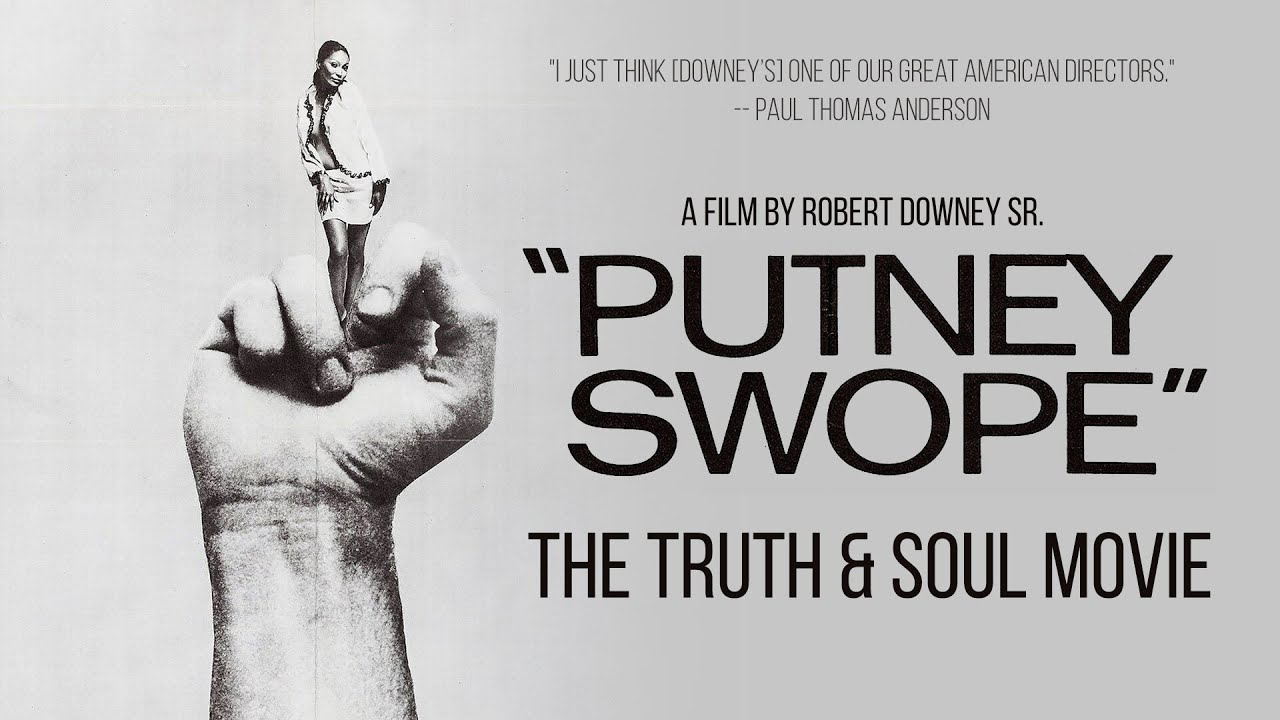
Robert Downey Sr., Putney Swope e la fame di senso nell’era della comunicazione anestetica
Una ragazza balla in un vicolo stretto e polveroso. Ai lati, cumuli di spazzatura; sul marciapiede, un barbone dorme raggomitolato contro il muro. Lei entra danzando, accompagnata da una musica funky che sembra provenire da un altro mondo. Indossa un vestito dorato che cattura ogni brandello di luce, riflettendo lampi caldi e accecanti mentre i suoi piedi calpestano il cemento irregolare. La gonna ondeggia, il movimento è dichiaratamente sexy, vitale, fuori posto e proprio per questo irresistibile.
Si ferma. Guarda dritto verso l’osservatore invisibile e dice:
“You can’t eat an air conditioner.”
Subito dopo compare la scritta:
FAN-A-WAY – A NEW EXPERIENCE IN ’LECTRIC FANS
E tutto si ferma per un istante.
La frase è assurda, quasi ridicola. Eppure pesa come un colpo di realtà. Non puoi mangiare un condizionatore. È un fatto semplice, innegabile. Ma è anche un attacco diretto al cuore della comunicazione moderna. Siamo nel 1969 e Robert Downey Sr. ha già capito tutto.
In Putney Swope, quella frase non viene spiegata, non viene giustificata, non viene addolcita. Non è una battuta: è un cortocircuito. Dice tutto e niente insieme e proprio per questo smaschera il meccanismo che domina la nostra percezione. Quando il linguaggio smette di spiegare, inizia a coprire. Quando non serve più a chiarire, diventa fumo. Comfort verbale. Refrigerazione concettuale.
FAN-A-WAY – A NEW EXPERIENCE IN ’LECTRIC FANS non è una promessa tecnologica. È una parodia. È la messa in scena dell’illusione: vendere aria come se fosse sostanza, esperienza come se fosse nutrimento, sensazione come se fosse senso. Il ventilatore non risolve nulla, ma fa dimenticare per un attimo il caldo. Come molti messaggi pubblicitari, non nutre, anestetizza.
Resta l’aria fredda, il rumore di fondo, il comfort apparente. Ma l’aria non sazia. La fame vera arriva dopo, quando il rumore cala, quando le parole finiscono, quando restiamo soli con una realtà che quelle parole non hanno mai raccontato.
Ed è allora che FAN-A-WAY smette di essere solo un marchio fittizio e rivela un secondo livello, più sottile e più inquietante. Fan-a-way può anche essere letto come find a way. Trova una via. Una nuova, elettrizzante avventura. Non una soluzione, ma una fuga elegante. Non affrontare il problema, aggiralo. Non nutrire, rinfresca. Non spiegare, fai sentire qualcosa.
Downey Sr. è chirurgico. Ci sta dicendo che abbiamo imparato a sostituire il senso con la sensazione, la verità con il comfort, la comprensione con l’esperienza. Abbiamo imparato a chiamare “nuovo” ciò che semplicemente ci distrae meglio.
E così tutto funziona. L’aria gira. Il rumore copre il silenzio. L’esperienza sembra completa.
Ma quando tutto si spegne, resta una sola verità, semplice e brutale:
puoi trovare una via,
puoi accendere un ventilatore,
puoi chiamarla un’esperienza elettrizzante.
Ma non puoi mangiare l’aria.
English Version
A girl dances in a narrow, dusty alley. Piles of trash line the sides; on the sidewalk, a homeless man sleeps curled up against the wall. She enters dancing, carried by a funky rhythm that seems to come from another world. She wears a golden dress that catches every fragment of light, reflecting warm, blinding flashes as her feet strike the uneven concrete. The skirt sways, the movement openly sexy, vital, out of place—and irresistible because of it.
She stops. Looks straight at the invisible observer and says:
“You can’t eat an air conditioner.”
Then a slogan appears:
FAN-A-WAY – A NEW EXPERIENCE IN ’LECTRIC FANS
Everything freezes for a moment.
The line is absurd, almost ridiculous. And yet it lands like a blow of reality. You can’t eat an air conditioner. A simple, undeniable fact. At the same time, it is a direct strike at the heart of modern communication. It’s 1969, and Robert Downey Sr. has already understood everything.
In Putney Swope, that sentence is left hanging. It isn’t explained, justified, or softened. It’s not a joke—it’s a short circuit. It says everything and nothing at once, and that’s precisely how it exposes the mechanism governing our perception. When language stops explaining, it starts covering things up. When it no longer clarifies, it becomes smoke. Verbal comfort. Conceptual refrigeration.
FAN-A-WAY – A NEW EXPERIENCE IN ’LECTRIC FANS is not a technological promise. It’s a parody. A staged illusion: selling air as substance, experience as nourishment, sensation as meaning. The fan solves nothing, but for a moment it makes you forget the heat. Like much advertising, it doesn’t feed—it anesthetizes.
What remains is cool air, background noise, apparent comfort. But air does not satisfy hunger. Real hunger arrives later, when the noise fades, when words run out, when we’re left alone with a reality those words never explained.
And that’s when FAN-A-WAY stops being just a fictional brand and reveals a second, more unsettling layer. Fan-a-way can also be read as find a way. Find a way. A new, electrifying adventure. Not a solution, but an elegant escape. Don’t face the problem—go around it. Don’t nourish—cool. Don’t explain—make people feel something.
Downey Sr. is surgical. He’s telling us that we’ve learned to replace meaning with sensation, truth with comfort, understanding with experience. We’ve learned to call “new” whatever distracts us more effectively.
And so everything works. The air circulates. The noise covers the silence. The experience feels complete.
But when it all shuts down, only one truth remains—simple and brutal:
you can find a way,
you can turn on a fan,
you can call it an electrifying experience.
But you can’t eat air.

Gallery



Post Recenti