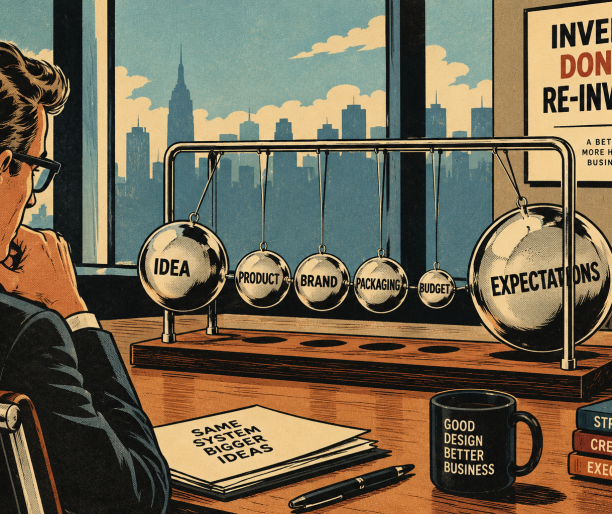
Inventare, non re-inventare. Il Design System come cultura aziendale
C’è una convinzione dura a morire secondo cui il talento sarebbe sufficiente a far funzionare un’azienda. È una delle illusioni più costose del mondo del lavoro. Metti insieme dieci persone brillanti senza un sistema e nel giro di poco tempo avrai dieci modi diversi di fare la stessa cosa, dieci linguaggi, dieci interpretazioni e dieci piccole verità che finiranno inevitabilmente per ostacolarsi a vicenda.
Il caos ha un’incredibile capacità di travestirsi da creatività.
È proprio qui che entra in gioco il Design System. Il termine fa immediatamente pensare al mondo del design digitale, a colori, font, pulsanti, griglie, interfacce e componenti. Tutto corretto, ma riduttivo. Un Design System, prima ancora di essere un insieme di elementi progettuali, è un modo per conservare l’intelligenza accumulata da un’organizzazione.
Ogni volta che un problema viene affrontato, discusso e risolto, quell’esperienza dovrebbe diventare patrimonio dell’azienda. Se qualche settimana dopo un’altra persona si trova davanti allo stesso problema e ricomincia a discuterlo da capo, quell’esperienza è andata perduta. Il costo non è soltanto il tempo impiegato. È l’energia mentale sottratta a qualcosa di nuovo.
Il vero scopo di un sistema non è dire alle persone cosa devono fare. È evitare che debbano continuare a decidere ciò che è già stato deciso bene.
Standardizzare ciò che non ha più bisogno di pensiero
Se abbiamo stabilito quale carattere utilizzare, non dobbiamo sceglierlo nuovamente ogni volta che prepariamo una presentazione. Se abbiamo definito come deve parlare il nostro brand, non dobbiamo reinventarne il tono a ogni comunicato. Se abbiamo trovato il modo migliore per presentare un prodotto, gestire un processo o costruire un’interfaccia, quella soluzione deve diventare il punto di partenza della volta successiva.
Questo non significa standardizzare il pensiero. Significa standardizzare ciò che non ha più bisogno di pensiero.
Molte aziende dichiarano di voler innovare, ma dedicano una quantità sorprendente delle proprie risorse a reinventare continuamente ciò che avevano già risolto. Cambiano presentazioni, procedure, linguaggi, formati e strumenti non perché esista una ragione strategica per farlo, ma semplicemente perché qualcuno è arrivato dopo e ha deciso di ricominciare.
Questa viene spesso chiamata libertà creativa. Molto più frequentemente è assenza di memoria organizzativa.
Un buon Design System crea invece una base comune. Non dice «non puoi fare diversamente». Dice «fin qui ci siamo già arrivati, parti da qui».
I limiti possono aumentare la creatività
È uno dei paradossi più interessanti del design. Un sistema apparentemente introduce dei limiti, ma in realtà aumenta lo spazio disponibile per la creatività. Se non devo spendere mezz’ora per decidere nuovamente la dimensione di un titolo, posso utilizzare quella mezz’ora per capire se quel titolo dice qualcosa di intelligente. Se non devo progettare per la cinquantesima volta lo stesso componente, posso dedicarmi al problema che ancora non ha una soluzione. Se non devo discutere continuamente il passato, posso occuparmi del futuro.
La libertà assoluta non produce necessariamente più creatività. A volte produce semplicemente più decisioni. Un limite intelligente, invece, costringe l’intelligenza a concentrarsi dove può realmente produrre qualcosa di nuovo.
L’azienda come un pendolo di Newton
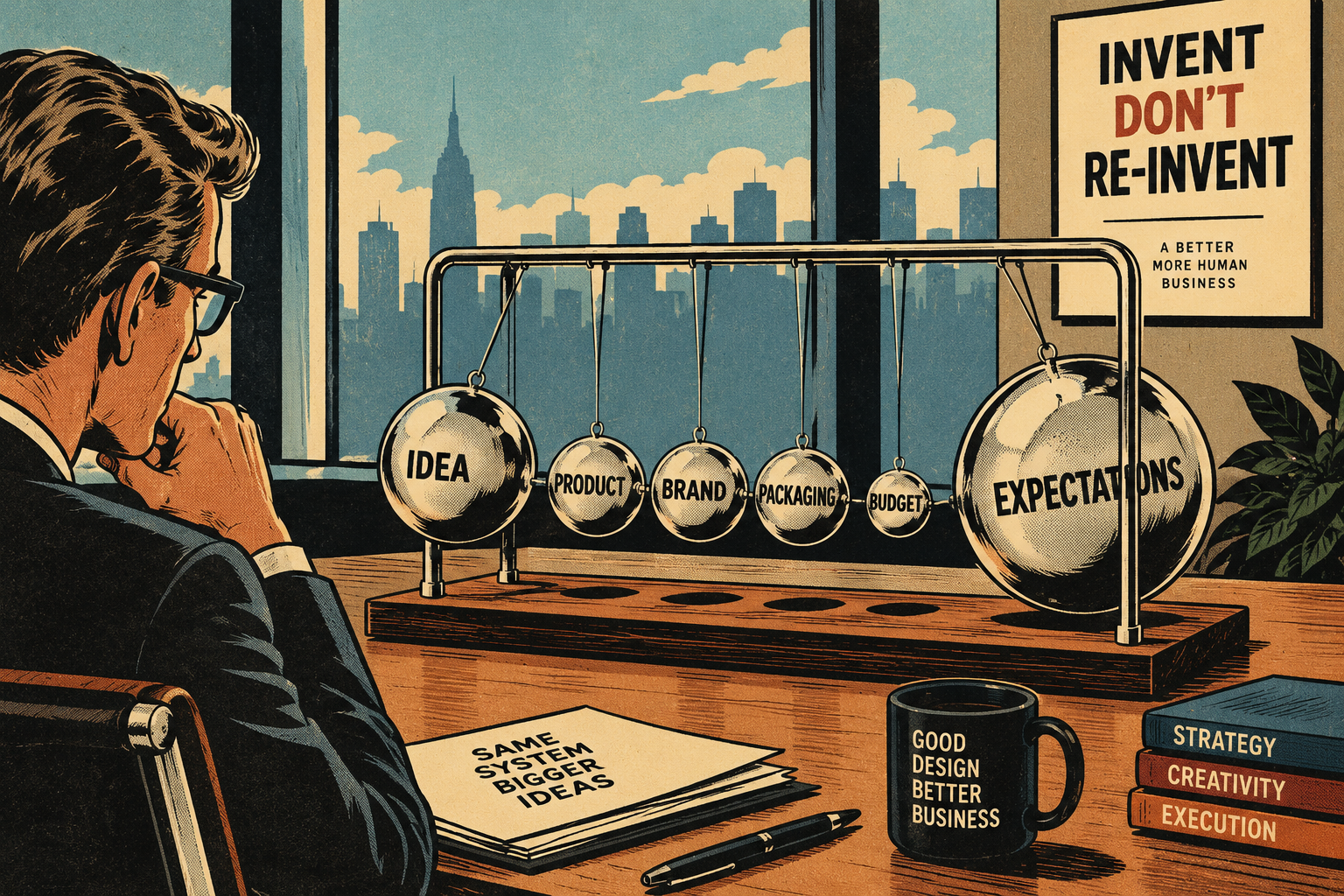
Possiamo immaginare un’azienda come un pendolo di Newton, quello composto da una fila di sfere identiche sospese una accanto all’altra. Solleviamo la prima, la lasciamo andare e l’energia attraversa il sistema fino a spingere in avanti l’ultima.
Ora diamo un nome a quelle sfere.
Prodotto. Marchio. Packaging. Ricerca. Comunicazione. ADV. Distribuzione. Budget. Customer experience.
E immaginiamo che l’energia che entra nel sistema sia l’idea.
Quando gli elementi sono coerenti, proporzionati e lavorano secondo una logica comune, l’idea attraversa tutta l’organizzazione. Parte dal prodotto, passa attraverso il marchio, diventa packaging, comunicazione, pubblicità ed esperienza e arriva al mercato conservando la propria forza.
Ma immaginiamo adesso che una delle sfere sia molto più grande delle altre.
Potrebbe essere la ricerca. Possiamo investire talmente tanto tempo nell’analisi da non arrivare mai alla decisione. Oppure potrebbe essere il budget pubblicitario, enorme rispetto alla qualità del prodotto. Potrebbe essere un packaging straordinario applicato a un prodotto mediocre, un’identità di marca potentissima sostenuta da un’esperienza del cliente incoerente o una creatività talmente dominante da dimenticare il mercato al quale dovrebbe parlare.
Il movimento non sarebbe più lo stesso. L’energia verrebbe assorbita, dispersa o deviata.
Ed è qui che il Design System smette definitivamente di essere una questione estetica. Il suo compito non è rendere tutte le cose uguali. È fare in modo che siano compatibili, proporzionate e capaci di trasferire energia l’una all’altra.
Il problema non è soltanto il troppo poco
Siamo abituati a pensare che un sistema funzioni male quando manca qualcosa. Poco budget, poca ricerca, poca comunicazione, poca creatività. Ma anche il troppo può rompere un sistema.
Troppa ricerca può impedire di decidere. Troppa comunicazione può promettere più di quanto il prodotto possa mantenere. Troppo budget può amplificare un’idea sbagliata. Troppa creatività può rendere incomprensibile un messaggio. Troppa attenzione alla perfezione può impedire a un progetto di arrivare sul mercato.
Il punto non è avere la sfera più grande. È fare in modo che l’energia attraversi tutte le sfere.
Un sistema deve poter cambiare
Naturalmente un Design System non deve trasformarsi in una religione. Un sistema che non può essere modificato diventa rapidamente burocrazia. Le regole hanno senso finché rappresentano la soluzione migliore conosciuta in quel momento. Quando qualcuno trova una soluzione migliore, il sistema deve evolvere e quella nuova esperienza deve diventare patrimonio di tutti.
Il sistema, quindi, non elimina il cambiamento. Elimina il cambiamento inutile.
Questa distinzione è fondamentale perché innovare non significa necessariamente fare qualcosa di diverso. Significa fare qualcosa di migliore. A volte significa rompere una regola. Molto più spesso significa evitare di rompere una regola che funzionava perfettamente soltanto per avere l’impressione di aver fatto qualcosa di nuovo.
Inventare, non re-inventare
Un Design System è quindi una scelta culturale prima ancora che progettuale. Significa decidere che il cervello delle persone è una risorsa troppo preziosa per essere utilizzata centinaia di volte sullo stesso problema. Significa trasformare le soluzioni in conoscenza condivisa e la conoscenza condivisa in velocità.
Le organizzazioni non rallentano necessariamente perché sono diventate complesse. Rallentano perché, nonostante tutta l’esperienza accumulata, continuano ogni mattina a comportarsi come se fosse il loro primo giorno.
La creatività dovrebbe cominciare dove finisce ciò che sappiamo già.
Per questo il principio alla base di un Design System potrebbe essere riassunto in una frase molto semplice.
Inventare ciò che ancora non esiste. Non re-inventare ciò che abbiamo già imparato a fare.
E forse un’azienda progettata bene può essere definita altrettanto semplicemente. È un’organizzazione nella quale un’idea può attraversare l’intero sistema senza perdere forza.
Testo di Gianluca Piroli
Invent, Don’t Re-Invent. Design Systems as Company Culture
There is a stubborn belief that talent alone is enough to make a company work. It is one of the most expensive illusions in business. Put ten brilliant people together without a system and, before long, you will have ten different ways of doing the same thing, ten languages, ten interpretations and ten small truths inevitably getting in each other’s way.
Chaos has an extraordinary ability to disguise itself as creativity.
This is precisely where a Design System comes into play. The term immediately brings to mind digital design, colours, fonts, buttons, grids, interfaces and components. All correct, but reductive. Before being a collection of design elements, a Design System is a way of preserving the intelligence accumulated by an organisation.
Every time a problem is addressed, discussed and solved, that experience should become part of the company’s shared knowledge. If, a few weeks later, someone encounters the same problem and starts discussing it again from scratch, that experience has been lost. The cost is not simply time. It is mental energy taken away from something new.
The real purpose of a system is not to tell people what to do. It is to prevent them from having to decide again what has already been decided well.
Standardise what no longer requires thought
If we have established which typeface to use, we should not choose it again every time we create a presentation. If we have defined how our brand should speak, we should not reinvent its tone for every communication. If we have found the best way to present a product, manage a process or build an interface, that solution should become the starting point for the next one.
This does not mean standardising thought. It means standardising what no longer requires thought.
Many companies claim they want to innovate while spending a surprising amount of their resources continuously reinventing things they have already solved. They change presentations, procedures, languages, formats and tools not because there is a strategic reason to do so, but simply because someone new has arrived and decided to start again.
This is often called creative freedom. More often, it is simply the absence of organisational memory.
A good Design System creates a common foundation. It does not say, “You cannot do it differently.” It says, “We have already reached this point. Start from here.”
Constraints can increase creativity
This is one of design’s most interesting paradoxes. A system apparently introduces constraints, yet it actually increases the space available for creativity. If I do not have to spend half an hour deciding the size of a headline again, I can use that half hour to decide whether the headline says something intelligent. If I do not have to design the same component for the fiftieth time, I can focus on the problem that still has no solution. If I do not have to continuously discuss the past, I can work on the future.
Absolute freedom does not necessarily produce more creativity. Sometimes it simply produces more decisions. An intelligent constraint, on the other hand, forces intelligence to concentrate where it can genuinely create something new.
The company as Newton’s cradle
Imagine a company as Newton’s cradle, the familiar device made of identical suspended spheres. Lift the first sphere, release it, and the energy travels through the system until it moves the sphere at the opposite end.
Now give those spheres names.
Product. Brand. Packaging. Research. Communication. Advertising. Distribution. Budget. Customer experience.
And imagine that the energy entering the system is the idea.
When all these elements are coherent, proportionate and operate according to a common logic, the idea can travel through the entire organisation. It starts with the product, passes through the brand, becomes packaging, communication, advertising and experience, and eventually reaches the market while preserving its strength.
But now imagine that one of those spheres is much larger than the others.
It might be research. We can spend so much time analysing that we never reach a decision. It could be an advertising budget completely disproportionate to the quality of the product. It might be extraordinary packaging wrapped around a mediocre product, a powerful brand identity supported by an inconsistent customer experience, or creativity so dominant that it forgets the market it is supposed to address.
The movement would no longer be the same. Energy would be absorbed, dispersed or diverted.
This is where a Design System definitively stops being an aesthetic matter. Its purpose is not to make everything identical. Its purpose is to make the elements compatible, proportionate and capable of transferring energy from one to another.
The problem is not only having too little
We tend to think a system fails when something is missing. Too little budget, too little research, too little communication, too little creativity. But too much can break a system as well.
Too much research can prevent decisions. Too much communication can promise more than the product can deliver. Too much budget can amplify the wrong idea. Too much creativity can make a message incomprehensible. Too much attention to perfection can prevent a project from ever reaching the market.
The point is not to have the biggest sphere. The point is to allow energy to travel through all of them.
A system must be able to change
A Design System should never become a religion. A system that cannot be changed quickly becomes bureaucracy. Rules make sense as long as they represent the best solution currently known. When someone finds a better solution, the system should evolve and that new experience should become shared knowledge.
A system therefore does not eliminate change. It eliminates unnecessary change.
This distinction matters because innovation does not necessarily mean doing something different. It means doing something better. Sometimes that requires breaking a rule. Far more often, it means resisting the temptation to break a perfectly good rule simply to create the impression that something new has been done.
Invent, don’t re-invent
A Design System is therefore a cultural decision before it is a design decision. It means recognising that people’s minds are too valuable to be used hundreds of times to solve the same problem. It means turning solutions into shared knowledge and shared knowledge into speed.
Organisations do not necessarily slow down because they become complex. They slow down because, despite everything they have learned, they continue to behave every morning as if it were their first day.
Creativity should begin where what we already know ends.
The principle behind a Design System can therefore be summarised very simply.
Invent what does not yet exist. Don’t re-invent what we have already learned how to do.
And perhaps a well-designed company can be described just as simply. It is an organisation in which an idea can travel through the entire system without losing its strength.
Written by Gianluca Piroli

Gallery




Post Recenti