Il packaging diventa messaggio
Quando il packaging smise di contenere e cominciò a dire
Fine anni Novanta. Un tempo in cui l’erboristeria parlava ancora sottovoce, con carte riciclate, colori spenti, toni dimessi e quella specie di pudore grafico che sembrava voler chiedere scusa prima ancora di vendere qualcosa.
Era il linguaggio della natura, certo. Ma anche quello della rinuncia, della polvere, dello scaffale laterale. Un’estetica rassicurante per chi già credeva in quel mondo, molto meno seducente per chi cercava efficacia, promessa, risultato.
Mi trovai a lavorare su un prodotto erboristico pensato per rassodare i glutei. Il problema era semplice, quasi perfetto nella sua assurdità: non si poteva dire.
Non si poteva scrivere esplicitamente “rassodante per i glutei”. Non si poteva trasformare la promessa in una frase. Non si poteva nominare ciò che il prodotto, commercialmente, voleva essere.
Il secondo problema era ancora più interessante. Avevo un’indagine che diceva esattamente il contrario di ciò che il mercato sembrava fare. Le persone non erano attratte dall’immaginario erboristico tradizionale. Non volevano necessariamente carta grezza, verde salvia, beige spento e foglioline rassicuranti. Si fidavano di più della tecnologia. Della chimica. Del laboratorio. Di qualcosa che apparisse evoluto, preciso, quasi scientifico.
Così decisi di fare due cose.
La prima fu usare una tecnologia allora inusuale per quel tipo di prodotto: la termoformatura litografica. Non una semplice scatola. Non un astuccio illustrato. Non un contenitore anonimo. Una forma.
La seconda fu lasciare che quella forma dicesse quello che le parole non potevano dire.
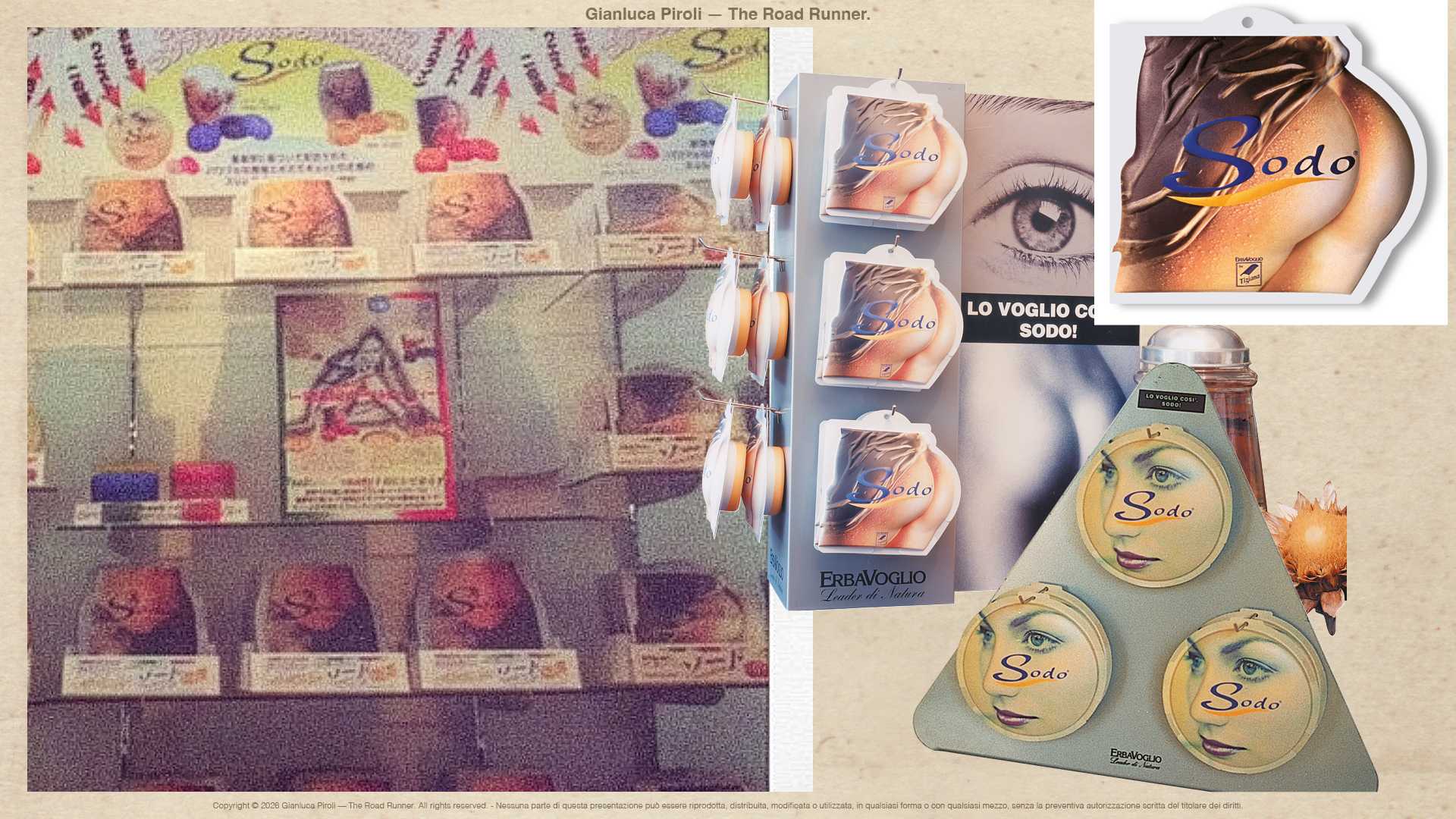
Nacque così una confezione a forma di glutei. Diretta, evidente, ironica, quasi sfacciata, ma perfettamente controllata. Sopra, una sola parola: «Sodo».
Nessun claim proibito. Nessuna promessa esplicita. Nessuna frase attaccabile. Solo un nome e una forma.
Era tutto lì.
Non dicevamo cosa facesse il prodotto, ma lo si capiva immediatamente. Non spiegavamo la funzione, la mettevamo davanti agli occhi. Non aggiravamo il problema con un trucco, lo trasformavamo in linguaggio.
Naturalmente arrivarono gli attacchi. Contestazioni, obiezioni, pressioni, tentativi di bloccare l’operazione. Ma la confezione resse. Resse perché non dichiarava ciò che non poteva dichiarare. Resse perché il packaging non era più soltanto un supporto grafico, ma un dispositivo narrativo, semantico, commerciale.
Fu molto divertente.
Meno divertente fu ciò che accadde dopo.
Il produttore di quelle confezioni prese quell’intuizione, quella tecnologia applicata in quel modo, quella possibilità di trasformare un contenitore in una piccola scultura industriale, e la portò altrove. La vendette a un’azienda molto importante.
Da lì, secondo quella traiettoria silenziosa e un po’ crudele con cui spesso viaggiano le idee, nacquero gli ovetti Kinder.
Non so se chiamarla discendenza, furto, coincidenza o destino industriale. So soltanto che quella storia confermò una cosa che per me era già chiarissima: il packaging non deve limitarsi a proteggere il prodotto. Deve diventare parte del prodotto.
Quando riesce davvero, non contiene soltanto. Parla.
E quando parla meglio della pubblicità, meglio del claim, meglio del venditore, allora non è più imballaggio.
È idea.
When packaging stopped containing and started speaking
Late Nineties. A time when herbal products still spoke in a low voice, wrapped in recycled paper, dull colors, muted tones and that kind of graphic modesty that seemed to apologize before even trying to sell anything.
It was the language of nature, of course. But also the language of restraint, dust, and the side shelf. Reassuring for those who already believed in that world, far less seductive for those looking for efficacy, promise, result.
I found myself working on an herbal product designed to firm the buttocks. The problem was simple, almost perfect in its absurdity: we could not say it.
We could not explicitly write “buttock firming product”. We could not turn the promise into a sentence. We could not name what the product, commercially speaking, wanted to be.
The second problem was even more interesting. I had research showing the exact opposite of what the market seemed to believe. People were not necessarily attracted to the traditional herbal aesthetic. They did not automatically want rough paper, sage green, faded beige and reassuring little leaves. They trusted technology more. Chemistry. The laboratory. Something that looked advanced, precise, almost scientific.
So I decided to do two things.
The first was to use a technology that was unusual at the time for that kind of product: lithographed thermoforming. Not a simple box. Not an illustrated carton. Not an anonymous container. A form.
The second was to let that form say what words could not say.
That is how a package shaped like buttocks was born. Direct, clear, ironic, almost shameless, yet perfectly controlled. On it, just one word: “Sodo”, meaning firm.
No forbidden claim. No explicit promise. No attackable sentence. Just a name and a shape.
Everything was there.
We were not saying what the product did, but everyone understood it immediately. We were not explaining the function, we were placing it in front of people’s eyes. We were not avoiding the problem with a trick, we were turning it into language.
Naturally, the attacks came. Objections, complaints, pressure, attempts to stop the operation. But the package held. It held because it did not declare what it could not declare. It held because packaging was no longer just a graphic support, but a narrative, semantic and commercial device.
It was very funny.
What happened later was less funny.
The manufacturer of those packages took that intuition, that technology applied in that way, that possibility of transforming a container into a small industrial sculpture, and brought it elsewhere. He sold it to a very important company.
From there, through one of those silent and slightly cruel paths by which ideas often travel, Kinder eggs were born.
I do not know whether to call it descent, theft, coincidence or industrial destiny. I only know that the story confirmed something that was already very clear to me: packaging should not merely protect the product. It should become part of the product.
When it truly works, it does not simply contain. It speaks.
And when it speaks better than advertising, better than a claim, better than a salesperson, then it is no longer packaging.
It is an idea.

Gallery

Post Recenti