Quando la perfezione è diventata noiosa – Capitolo 2
Quando la perfezione è diventata noiosa
C’è stato un momento, dopo l’arrivo dei computer, in cui tutto funzionava troppo bene.
Le pellicole uscivano perfette. Le scritte erano dritte, allineate, con i bordi puliti, senza uno sbaffo, senza una vibrazione. La promessa del digitale sembrava mantenuta: niente più notti a rifare le composizioni, niente più Letraset consumati, niente più bisturi che ti tagliavano il dito perché avevi sbagliato di mezzo millimetro. Bastava scrivere, impostare, impaginare. Usciva tutto giusto.
Ed è proprio lì che ho iniziato a annoiarmi.
Perché quando tutto è perfetto, tutto inizia a sembrare uguale. La perfezione, se non è abitata da qualcuno, diventa uno standard industriale. È pulita, ma è muta.
Fu in quel momento che sentii il bisogno di riportare dentro la grafica un po’ di umanità. Non con i discorsi, con le mani. Iniziai a fare una cosa che, per chi lavorava con me allora, sembrava una follia: prendere le pellicole perfette che uscivano dal computer e rovinarle.
Le stropicciavo.
Le graffiavo.
A volte ci passavo i pennarelli sui bordi per farle sembrare vissute.
A volte rovinavo direttamente il prodotto stampato.
Quando lo facevo, in studio si alzava sempre la stessa frase: “Nooo, ma cosa fai!”. E io, con molta calma, rispondevo: “Usatele così.” Dopo un po’ hanno capito. Hanno visto che quelle cose “rovinate” avevano più vita di quelle perfette.
Non era solo un fatto estetico. Era un fatto di linguaggio. Il digitale aveva reso possibile la perfezione seriale. L’artigianato serviva a riportare dentro l’errore controllato, l’asimmetria, la memoria. Facevo invecchiamenti manuali su oggetti nati dal computer. Il metallo lo buttavo nel prato, dopo averlo graffiato con la carta vetrata, per farlo arrugginire. Il legno lo trattavo con prodotti che non ho mai detto a nessuno, proprio per evitare che qualcuno copiasse quella patina. Era un modo per dire: questo non lo fa la macchina.
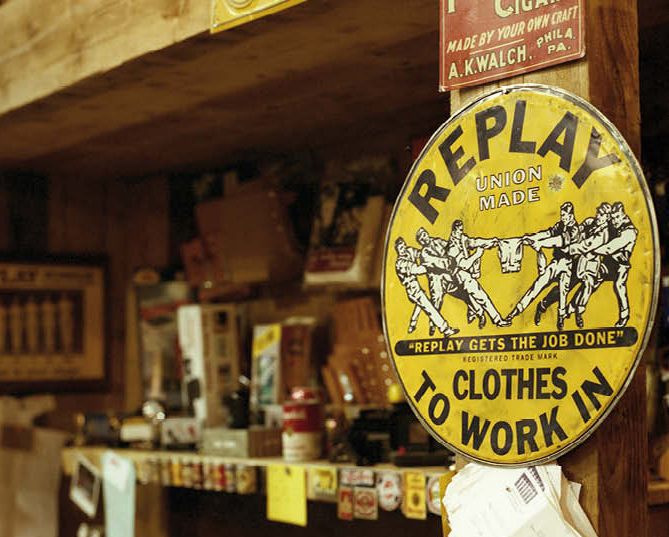
È un po’ retorico dirlo, ma è andata così: molte di queste cose le ho cominciate nel mio garage a Parma. Pomeriggi interi a studiare come rendere “vissuto” ciò che era nato “pulito”. In quegli anni (parliamo più o meno del 1990-1996) lavoravo attraverso agenzie come Augusto Vignali, Art Force, Energy Project e altre, e finivano sulla mia scrivania lavori per marchi che oggi sono storia: Levis, Lee, Avirex, Best Company, Americanino. Poi arrivò il periodo Replay e Diesel. Con Claudio Buziol ci fu un rapporto bellissimo: mi chiese di lavorare in esclusiva per loro in un momento in cui Replay stava passando da 10 miliardi a circa 400. Era un’epoca in cui la moda voleva sembrare vissuta, autentica, consumata. La tecnologia produceva il file, noi gli davamo la vita.
Quella fase è interessante oggi perché ci fa leggere meglio quello che sta succedendo con l’intelligenza artificiale. La AI è esattamente nella stessa posizione dei computer di allora: produce cose perfette, pulite, senza sbavature, rapidamente. Ma se tutti usano lo stesso strumento allo stesso modo, il risultato torna a essere “tutto uguale”.
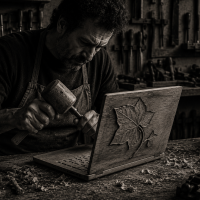
È lì che torna l’artigiano.
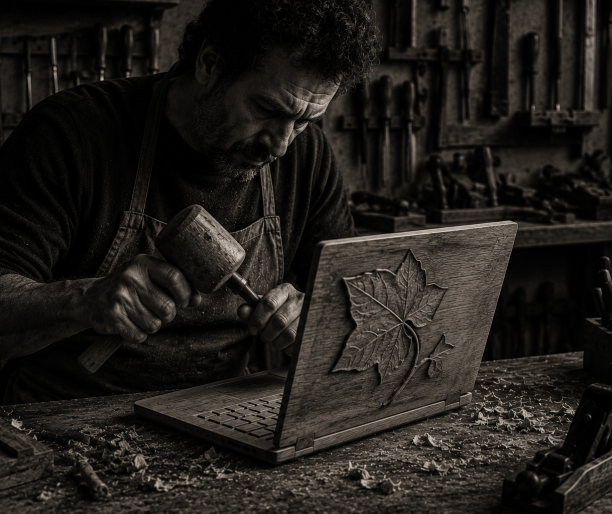
Ieri l’artigiano era quello che prendeva la pellicola perfetta e la rovinava per darle un’anima. Oggi l’artigiano è quello che prende l’output dell’AI e lo personalizza: cambia la texture, sporca il bordo, inserisce un dettaglio che non c’era nel prompt, mescola digitale e materiale, stampa e poi rielabora a mano, reimporta e ricompone. La logica è identica: la tecnologia apre, l’artigianato distingue.
Se c’è una cosa che mi porto dietro da quel periodo è questa: la tecnologia non ha mai cancellato il mestiere. Ha solo spostato il punto in cui il mestiere entra. Prima entrava all’inizio (camera oscura, Letraset, pellicole). Poi è entrato dopo (invecchiamento, distress, personalizzazioni). Con l’AI entrerà ancora più avanti: in fase di direzione del gusto, di scelta della variante, di controllo del “troppo perfetto”.
La perfezione la fa la macchina.
La firma la fa l’uomo.
(Continua. Nella prossima puntata, in uscita il 28 novembre: dall’AI generativa alla manualità digitale, cosa resta davvero “nostro”.)
From Letraset to Artificial Intelligence. Part 2: when perfection became boring
There was a moment, right after computers arrived, when everything started to work a little too well.
Films came out perfect. Lettering was straight, aligned, with clean edges, no smudges, no vibration. The digital promise seemed fulfilled: no more nights redoing compositions, no more wasted Letraset sheets, no more scalpels cutting your fingers because you missed half a millimeter. You just typed, set, laid out. Everything came out right.
And that is exactly when I started to get bored.
Because when everything is perfect, everything starts to look the same. Perfection, if it is not inhabited by someone, becomes an industrial standard. It is clean, but it is silent.
That is when I felt the need to bring some humanity back into graphic design. Not with theory, with hands. I began doing something that, for the people working with me at the time, looked like madness: I took the perfect films coming out of the computer and I ruined them.
I crumpled them.
I scratched them.
Sometimes I took markers and damaged the edges to make them look used.
Sometimes I went straight onto the printed products.
Every time I did it, the reaction in the studio was always the same: “No, what are you doing!” And I, very calmly, said: “Use them like this.” After a while they understood. They saw that those “damaged” pieces had more life than the perfect ones.
It was not just about style. It was about language. Digital tools had made serial perfection possible. Craft was needed to bring back controlled error, asymmetry, memory. I was manually aging things that had been born digital. I threw metal in the grass after scratching it with sandpaper to make it rust. I treated wood with products I never told anyone about, just to prevent people from copying that patina. It was my way of saying: this part cannot be done by the machine.
It sounds a little predictable to say it, but it is true: I started many of these things in my garage in Parma. Entire afternoons inventing manual aging processes for digital products. In those years (roughly 1990-1996) I was working through agencies like Augusto Vignali, Art Force, Energy Project and others, and I was dealing with brands that are now part of design history: Levis, Lee, Avirex, Best Company, Americanino. Then came the Replay and Diesel period. I became very close to Claudio Buziol; he asked me to work exclusively for them at a time when Replay was going from 10 billion lire to around 400. It was a very creative phase: fashion wanted to look lived-in, authentic, worn. Technology produced the file, we gave it a life.
That phase is interesting today because it helps us read what is happening with AI. AI is in the same spot as computers back then: it produces things that are perfect, clean, flawless, fast. But if everyone uses the same tool in the same way, the outcome goes back to being “all the same.”
That is where the artisan comes back.
Back then, the artisan was the one who took the perfect film and “ruined” it to give it a soul. Today, the artisan is the one who takes the AI output and personalizes it: changes the texture, dirties the edge, inserts a detail that was not in the prompt, mixes digital and material, prints and then handworks it, reimports and recomposes. The logic is identical: technology opens the door, craftsmanship makes the difference.
If there is one thing I have kept from that period, it is this: technology has never erased the craft. It has only moved the point at which the craft steps in. First it stepped in at the beginning (darkroom, Letraset, films). Then it stepped in later (aging, distressing, customizations). With AI, it will step in even further downstream: in taste direction, in choosing the variant, in controlling what is “too perfect.”
The machine does perfection.
The human signs it.
(To be continued. Next chapter coming on November 28: from generative AI to digital handwork, what really remains ours.)

Gallery
Post Recenti