Ghost Army: mentire per “salvare vite”
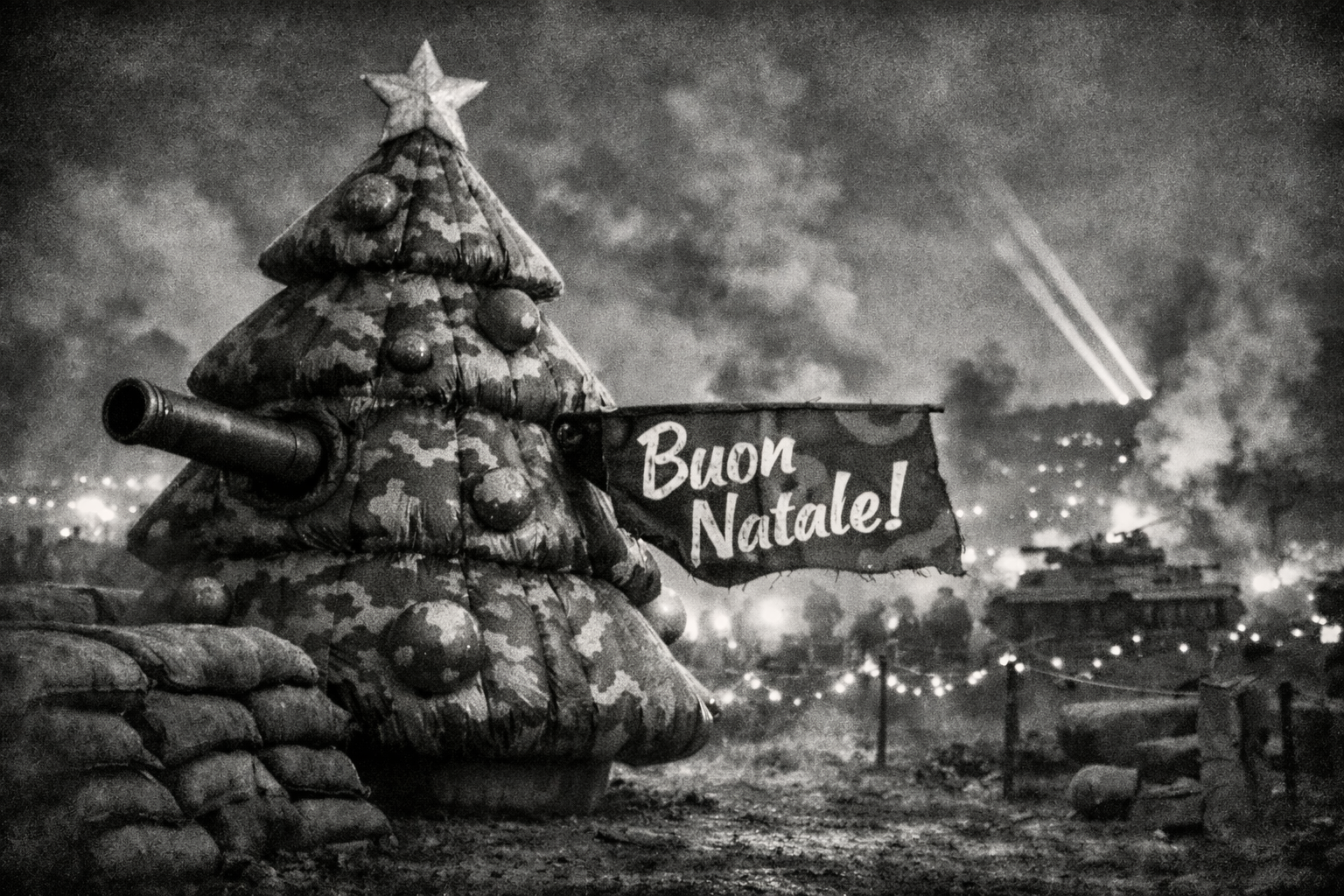
Dal 23rd Headquarters Special Troops ai feed: storia breve e sporca di un’illusione che non ha mai smesso di funzionare.
È Natale, o qualcosa che gli assomiglia abbastanza da non fare domande. Le città sono illuminate come set cinematografici, le vetrine promettono felicità immediata e tutti sembrano improvvisamente d’accordo su cosa desiderare. È il periodo migliore per parlare di illusioni ben costruite. Di quelle fatte apposta per sembrare vere quando nessuno ha voglia di guardare troppo da vicino.
Nel 1944 l’Europa era un posto in cui la verità durava pochissimo. Bastava un bombardamento, una foto sgranata, una voce captata per radio e la realtà cambiava direzione. In quel clima l’esercito americano fece una cosa che oggi chiameremmo geniale, allora semplicemente disperata: arruolò artisti. Non per decorare le baracche, ma per mentire meglio. Illustratori, scenografi, grafici, tecnici del suono. Gente che sapeva come funziona l’occhio umano, e soprattutto quanto sia facile prenderlo in giro quando ha paura. Li misero insieme, gli diedero un nome burocratico al limite dell’ipnosi – 23rd Headquarters Special Troops – e li mandarono a combattere una guerra che non esisteva.
La chiamarono Ghost Army perché era fatta di niente. Carri armati gonfiabili che oscillavano al vento come balene spiaggiate, cannoni di gomma puntati verso il nulla, camion vuoti parcheggiati con la precisione di un set cinematografico. Di notte, altoparlanti enormi riversavano nell’aria rumori registrati di divisioni in movimento, mentre alla radio voci finte riproducevano errori veri, esitazioni, frasi buttate lì apposta per sembrare autentiche. Dall’alto funzionava tutto alla perfezione. Le foto aeree non mentono, si dice. Falso. Mentono benissimo, se le aiuti un po’.
Il punto non era ingannare i soldati tedeschi, ma i loro cervelli. Convincerli che lì sotto c’era qualcosa di abbastanza reale da meritare attenzione, paura, spostamenti di truppe. E funzionò. Intere divisioni furono dirottate contro un esercito fatto d’aria, mentre quello vero avanzava altrove. Nessun colpo sparato, eppure la morte si spostava come una conseguenza logica. A quel punto era chiaro che la guerra non si vince solo con il fuoco, ma con la percezione. Chi controlla ciò che sembra vero controlla anche ciò che accade dopo.
Quando la guerra finì, la Ghost Army evaporò come tutte le illusioni ben riuscite. Silenzio assoluto. Segreto militare. Niente racconti, niente gloria. Molti di quei ragazzi tornarono a casa e finirono dove il Novecento avrebbe continuato a combattere le sue guerre più redditizie: pubblicità, design, comunicazione, architettura dell’immaginario. Avevano imparato una lezione semplice e pericolosa: non serve dire la verità, basta costruire una storia che regga abbastanza a lungo.
Ci vollero decenni prima che qualcuno aprisse gli archivi e dicesse: sì, era tutto vero. L’armata fantasma era esistita davvero. A quel punto, però, il mondo aveva già interiorizzato il metodo. La menzogna aveva smesso di essere un’eccezione bellica ed era diventata un’infrastruttura quotidiana. Non più propaganda, ma atmosfera. Non più inganno, ma contesto.
Oggi i carri armati gonfiabili sono invisibili. Si chiamano feed, insight, modelli predittivi. La pubblicità non ti dice cosa comprare, ti suggerisce chi essere. L’intelligenza artificiale, usata male, non capisce nulla, ma impara molto in fretta cosa ti fa reagire. Amplifica le tue convinzioni, ti restituisce una versione del mondo che ti somiglia abbastanza da non farti scappare. Non mente apertamente. Ti accompagna. Ed è molto peggio.
La Ghost Army fingeva di essere potente per ingannare il nemico. L’AI, oggi, finge di essere intelligente per guidare il comportamento. Nel 1944 i fantasmi erano un’arma. Oggi sono l’ambiente. La guerra creativa non è mai finita, solo che adesso non sai più da che parte stai combattendo. E quando non sai chi è il nemico, di solito, sei tu.
Fuori è di nuovo Natale. Le luci tremano, le promesse sono ovunque e i fantasmi lavorano a pieno regime, silenziosi come sempre. Eppure qualcosa resiste. La stessa cosa che nel 1944 spinse un gruppo di artisti a usare l’inganno non per dominare, ma per evitare altro sangue. La creatività può mentire, sì. Ma può anche scegliere perché farlo. In un mondo che confonde l’illusione con la verità, forse l’unico atto davvero sovversivo è ricordarsi che immaginare non significa ingannare. Significa ancora poter scegliere.
English Version
It’s Christmas, or something close enough to it that no one feels like asking questions. Cities are lit up like movie sets, shop windows promise instant happiness, and everyone suddenly seems to agree on what they want. It’s the perfect time to talk about well-constructed illusions. The kind designed to look real when no one feels like looking too closely.
In 1944, Europe was a place where truth had a very short lifespan. A single bombing, a grainy photograph, a voice picked up on the radio, and reality would change direction. In that climate, the U.S. Army did something that today we would call brilliant, and back then was simply desperate: it recruited artists. Not to decorate barracks, but to lie better. Illustrators, set designers, graphic artists, sound technicians. People who understood how the human eye works, and above all how easy it is to fool it when it’s afraid. They were brought together, given a bureaucratic name bordering on hypnosis — the 23rd Headquarters Special Troops — and sent to fight a war that didn’t exist.
They called it the Ghost Army because it was made of nothing. Inflatable tanks swaying in the wind like stranded whales, rubber cannons aimed at emptiness, empty trucks parked with the precision of a film set. At night, massive loudspeakers poured recorded sounds of moving divisions into the air, while fake radio voices reproduced real mistakes, hesitations, phrases casually dropped to sound authentic. From above, everything worked perfectly. Aerial photographs don’t lie, they say. False. They lie extremely well, if you help them a little.
The goal wasn’t to fool German soldiers, but their brains. To convince them that down there was something real enough to deserve attention, fear, troop movements. And it worked. Entire divisions were diverted against an army made of air, while the real one advanced elsewhere. Not a single shot fired, and yet death shifted position as a logical consequence. At that point it became clear that wars aren’t won only with firepower, but with perception. Whoever controls what seems true also controls what happens next.
When the war ended, the Ghost Army evaporated like all successful illusions. Total silence. Military secrecy. No stories, no glory. Many of those men went home and ended up where the twentieth century would continue to fight its most profitable wars: advertising, design, communication, the architecture of imagination. They had learned a simple and dangerous lesson: you don’t need to tell the truth, you just need to build a story that holds together long enough.
It took decades before someone opened the archives and said: yes, it was all real. The phantom army had truly existed. By then, however, the world had already internalized the method. The lie had stopped being a wartime exception and had become a daily infrastructure. No longer propaganda, but atmosphere. No longer deception, but context.
Today, inflatable tanks are invisible. They’re called feeds, insights, predictive models. Advertising doesn’t tell you what to buy; it suggests who to be. Artificial intelligence, when used poorly, understands nothing, but learns very quickly what makes you react. It amplifies your beliefs, hands back a version of the world that resembles you just enough to keep you from leaving. It doesn’t lie openly. It walks alongside you. And that is much worse.
The Ghost Army pretended to be powerful to deceive the enemy. AI today pretends to be intelligent to guide behavior. In 1944, ghosts were a weapon. Today, they are the environment. The creative war never ended — now you just don’t know which side you’re fighting on. And when you don’t know who the enemy is, it’s usually you.
Outside, it’s Christmas again. The lights flicker, promises are everywhere, and the ghosts are working at full capacity, silent as ever. And yet something resists. The same thing that in 1944 pushed a group of artists to use deception not to dominate, but to avoid more bloodshed. Creativity can lie, yes. But it can also choose why. In a world that confuses illusion with truth, perhaps the only truly subversive act left is remembering that imagining does not mean deceiving. It still means being able to choose.
by Gianluca Piroli

Gallery



Post Recenti