La rete, la materia e la coscienza del fare – Capitolo 3
La rete, la materia e la coscienza del fare
C’è stato un momento, tra la fine degli anni Novanta e i primi Duemila, in cui la grafica smise di essere un foglio e cominciò a diventare una finestra.
Non si stampava più soltanto: si navigava.
Le idee non finivano più su carta, ma dentro uno schermo che si illuminava da solo.
Era nata la rete.
Fu un passaggio silenzioso ma enorme.
All’improvviso, i lavori che fino a ieri erano stati fatti per essere toccati — la carta, la stampa, le vernici, le textures — dovevano cominciare a “funzionare” anche nel mondo digitale.
Il mestiere del grafico si trovò in bilico: metà artigiano, metà programmatore.
Dovevi sapere come funzionava il codice HTML, ma anche come si sporcava un bordo con un pennello secco.
Era la nascita di una nuova figura, quella dell’art director ibrido: uno che conosceva la materia ma parlava con la macchina.
In quegli anni cominciò a cambiare anche l’idea di bellezza.
La perfezione digitale, che per un attimo ci aveva sedotto, cominciava a stancare.
Ci accorgemmo che le cose più interessanti erano quelle che avevano una storia.
Fu allora che, senza rendercene conto, nacque anche un’altra rivoluzione: quella della coscienza del fare.
Mentre tutto diventava virtuale, qualcuno cominciava a chiedersi: ma cosa resta reale?
La risposta stava nei materiali, nelle mani, nel tempo.
Si cominciò a parlare di ecologia, di sostenibilità, di prodotto responsabile.
Non era ancora marketing — era istinto.
Le carte con fibre naturali, le stampe su supporti riciclati, l’idea che un difetto potesse essere un valore, che l’usura fosse una forma di sincerità.
Io, che arrivavo dal mondo delle pellicole e dei pennarelli, vedevo questa trasformazione con curiosità.
Dopo anni di rovine creative, mi trovai a lavorare con brand che cominciavano a parlare di “autenticità” come se fosse una nuova frontiera tecnologica.
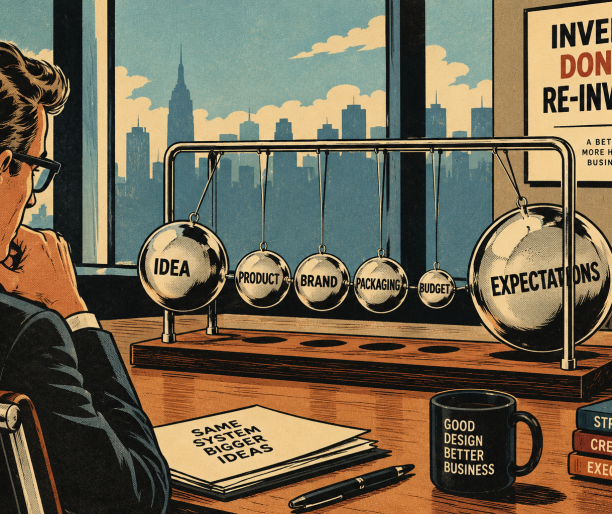
Era divertente, ma anche rivelatore: più diventava potente la macchina, più cresceva il bisogno di umanità.
Internet portava tutto ovunque, ma l’identità rischiava di scomparire.
Fu il periodo in cui cominciarono le prime vendite online.
Le immagini non erano più solo rappresentazioni, ma promesse.
Un bottone “Buy Now” valeva più di un manifesto.
L’estetica si spostava verso la velocità, ma nel frattempo cresceva la nostalgia del lento, del tangibile, del vero.
Quel contrasto mi affascinava.
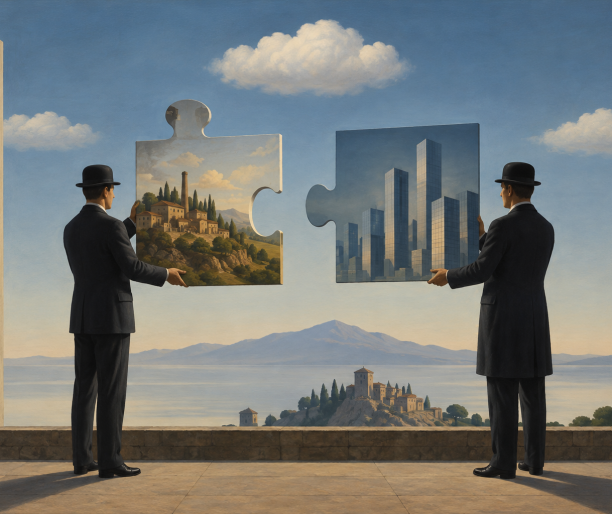
Da un lato la rete: perfetta, luminosa, istantanea.
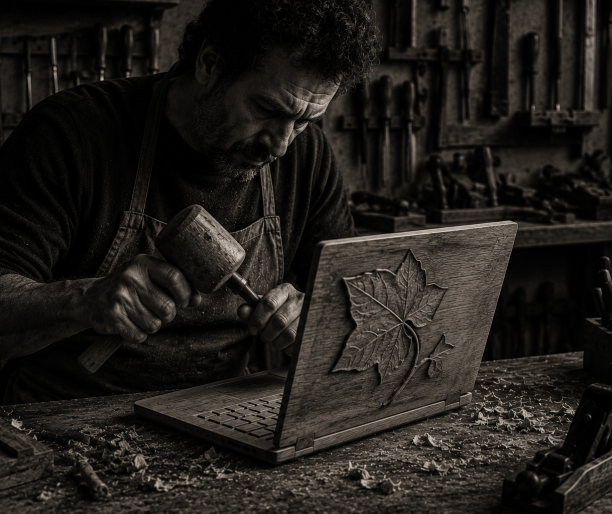
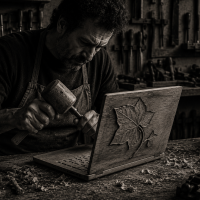
Dall’altro la materia: ruvida, calda, piena di memoria.
Nel mezzo, noi.
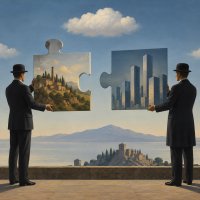
Gli artigiani della grafica, che cercavano di tenere insieme due mondi: la bellezza fatta di pixel e quella fatta di polvere.
In quel momento, però, accadde anche un’altra cosa: il contenuto prese il sopravvento sulla materia.
Non bastava più saper fare, bisognava avere qualcosa da dire.
Le immagini non dovevano solo “funzionare”: dovevano significare.
E per me fu un altro punto di svolta.
Avevo passato anni a lavorare sulla superficie — texture, materiali, imperfezioni — e mi accorsi che il passo successivo sarebbe stato lavorare sulla sostanza.
Sul messaggio.
Sul perché delle cose.
Credo che da lì sia nato tutto ciò che oggi chiamiamo “sostenibilità creativa”: non solo rispetto per l’ambiente, ma rispetto per il senso delle cose.
La tecnologia allungava la vita delle immagini, ma l’artigianato le dava ancora un’anima.
E ogni volta che il mondo si spostava un po’ più avanti, la mano umana trovava un nuovo modo per tornare dentro.
Col tempo, questo pensiero si è allargato.
Perché se la grafica, la materia e la tecnologia possono servire a dare senso alle cose, allora possono anche servire a migliorarle.
Da questa consapevolezza è nata la mia esigenza di sostenere attività legate al bene comune, ai diritti umani, ai bambini, all’Africa come all’Italia.
Un modo per restituire, anche attraverso la creatività, qualcosa al mondo che ci ospita.
(Continua. Nella prossima puntata, in uscita il 1 dicembre: la nascita dell’immagine liquida e il tempo del tutto immediato.)
From Letraset to Artificial Intelligence. Part 3: the web, the material, and the consciousness of making
There was a moment, between the late Nineties and the early 2000s, when graphic design stopped being a sheet of paper and started becoming a window.
We no longer just printed — we navigated.
Ideas no longer ended up on paper, but inside a screen that glowed on its own.
The web was born.
It was a silent yet enormous shift.
Suddenly, the works that had always been meant to be touched — paper, inks, textures — had to “work” in a digital world.
Graphic design found itself suspended: half craft, half code.
You needed to understand HTML, but also how to roughen an edge with a dry brush.
That was the birth of a new hybrid art director: someone who knew matter but spoke to machines.
In those years, the very idea of beauty began to change.
Digital perfection, which had fascinated us for a while, started to feel dull.
We realized that the most interesting things were the ones with a story.
That was also the birth of another revolution: the consciousness of making.
While everything turned virtual, people began asking: what still feels real?
The answer was in materials, hands, and time.
We started talking about ecology, sustainability, and responsible creation.
It wasn’t yet marketing — it was instinct.
Natural-fiber papers, recycled stock, the idea that a flaw could be a virtue, that wear could be a form of truth.
Coming from the world of films and markers, I watched this shift with fascination.
After years of creative “ruin,” I began working with brands that spoke of “authenticity” as if it were the next technology.
It was ironic, but revealing: the more powerful the machine became, the greater the need for humanity.
The Internet made everything reachable, but identity was slipping away.
It was also the time when online sales began.
Images stopped being mere representations and became promises.
A “Buy Now” button was worth more than a billboard.
Aesthetics shifted toward speed, but nostalgia for the slow, the tangible, the real grew in parallel.
That contrast fascinated me.
On one side: the web — perfect, luminous, immediate.
On the other: matter — rough, warm, full of memory.
In between: us.
The artisans of design, trying to hold together two worlds — beauty made of pixels and beauty made of dust.
But something else happened at that moment: content began to take over matter.
It was no longer enough to make things well — you had to have something to say.
Images didn’t just have to “work”; they had to mean.
And for me, that was another turning point.
After years of working on surfaces — textures, materials, imperfections — I realized the next step was to work on substance.
On message.
On the why of things.
I believe that’s where what we now call “creative sustainability” was born: not just respect for the environment, but respect for meaning.
Technology could extend the life of images, but craft still gave them a soul.
And every time the world moved a step forward, the human hand found a new way to step back in.
Over time, that thought grew broader.
Because if graphics, matter, and technology can help give meaning to things, they can also help improve them.
From that awareness came my need to support activities devoted to human rights, children, and solidarity projects — in Africa as in Italy.
A way to give something back, through creativity, to the world that hosts us.
(To be continued. Next chapter coming on December 1: the birth of the liquid image and the time of the instantaneous.)

Gallery
Post Recenti