Gli artigiani della grafica – Capitolo 1
Gli artigiani della grafica
C’è chi pensa che la grafica, oggi, sia solo questione di software.
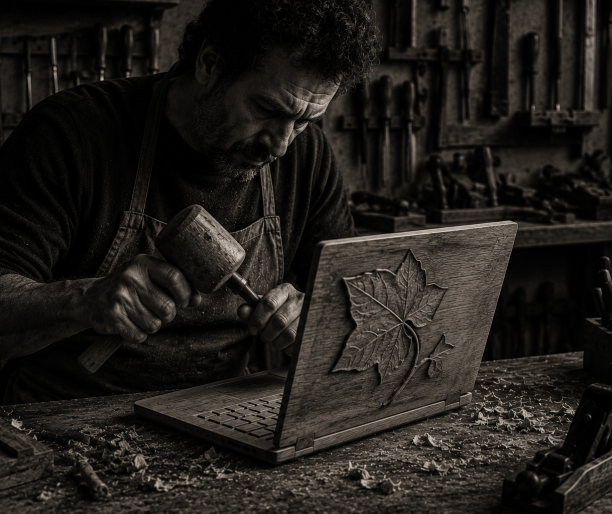
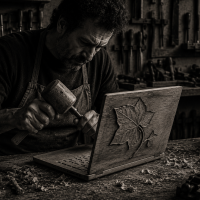
Noi che siamo cresciuti con le mani sporche di colla, le dita annerite dalla grafite e le notti passate in laboratorio sappiamo che non è così. La grafica è un mestiere d’artigiani. Solo che gli utensili cambiano.
Quando ho comprato il mio primo computer, un Macintosh Plus, era il 1986 o forse l’87.
Lo schermo aveva 9 pollici — poco più grande di quello di un iPhone Pro Max — ma con una risoluzione di appena 512×342 pixel, 72 punti per pollice.
Oggi un iPhone arriva a 2796×1290 pixel con una densità di oltre 460 ppi.
All’epoca, guardare lo schermo del Mac era come osservare il mondo attraverso una finestra lattiginosa. Eppure, in quella finestra, stava per cambiare tutto.
Fino a quel momento, per creare una scritta destinata alla stampa serviva una preparazione maniacale.
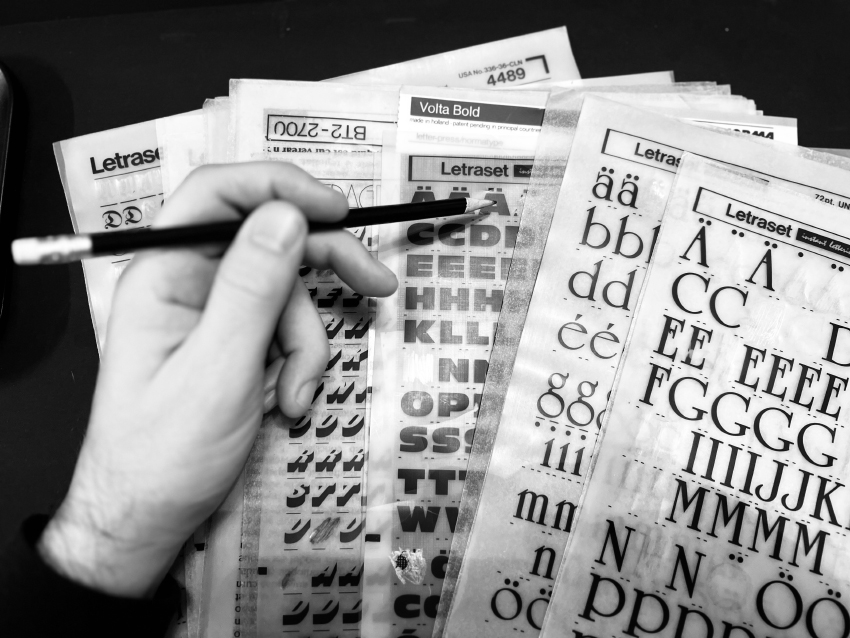
Si usavano i Letraset — fogli di acetato con caratteri tipografici trasferibili, da strofinare su carta con una matita dura, lettera per lettera. Ogni parola era una composizione manuale, fragile, eppure perfetta.
Le immagini, invece, si riproducevano con un procedimento quasi alchemico: fotografia, pellicola negativa, passaggio in camera oscura, ingranditore, mascherature, sviluppo, asciugatura.
Poi, solo allora, si montava tutto su tavole di cartone con bisturi e colla spray.
Era un lavoro da artigiani e da chirurghi insieme.
Serviva precisione, pazienza e una cultura visiva che oggi chiameremmo “analogica” ma che, in realtà, era semplicemente umana.
Io, pur uscendo dall’Istituto d’Arte, non avevo fatto molta esperienza pratica in quel campo.
Ma con quel piccolo computer e un software che si chiamava FreeHand, accadde qualcosa che ancora oggi mi sembra magico:
scrivevo una parola, la impostavo, la vedevo subito perfetta. Pronta per essere trasferita su pellicola, stampata, riprodotta.
In un battito di ciglia, il mondo era cambiato.
Una cosa che prima richiedeva ore di lavoro, mani esperte e attrezzi di precisione era diventata accessibile a chiunque.
Da quel momento, la differenza non la faceva più la tecnica, ma le idee.
La grafica aveva smesso di essere un mestiere e stava diventando un linguaggio.
E come ogni linguaggio, avrebbe trovato presto nuovi strumenti, nuove mani, nuove voci.
Ma questa — come sempre — è un’altra storia.
Continua nella prossima puntata, in uscita il 14 novembre.
The Artisans of Graphic Design
Some people think that graphic design today is just a matter of software.
Those of us who grew up with glue on our hands, graphite-stained fingers, and long nights spent in the workshop know that it’s not true. Graphic design is a craftsman’s trade. Only the tools change.
When I bought my first computer, a Macintosh Plus, it was 1986 or maybe ’87.
The screen measured 9 inches—slightly larger than today’s iPhone Pro Max—but with a resolution of just 512×342 pixels and 72 dpi.
Today an iPhone reaches 2796×1290 pixels with a density of over 460 ppi.
Back then, looking at the Mac’s screen was like peering at the world through a milky window. Yet, inside that window, everything was about to change.
Until that moment, creating lettering for print required obsessive preparation.
We used Letraset—acetate sheets with dry-transfer typefaces, to be rubbed onto paper with a hard pencil, one letter at a time. Each word was a manual composition, fragile yet perfect.
Images, on the other hand, were reproduced through an almost alchemical process: photography, negative film, the darkroom, the enlarger, masking, developing, drying.
Only then was everything mounted on cardboard with spray glue and a scalpel.
It was a job for both artisans and surgeons.
It demanded precision, patience, and a visual culture that today we might call “analog,” but which was, in truth, simply human.
I, even though I had graduated from an Art Institute, hadn’t done much hands-on work of that kind.
But with that little computer and a piece of software called FreeHand, something happened that still feels magical to me:
I typed a word, set it, and immediately saw it appear—perfect, ready to be transferred to film, printed, reproduced.
In the blink of an eye, the world had changed.
Something that once took hours of skilled labor and precise tools had become accessible to anyone.
From that moment on, what mattered was no longer technique, but ideas.
Graphic design had stopped being a trade and had become a language.
And like every language, it would soon find new tools, new hands, new voices.
But that—as always—is another story.
To be continued — next chapter coming on November 14.

Gallery
Post Recenti